
What To Do When Your Creative Career Feels Stuck
When Something No Longer Fits
One of the most common things I hear from creatives is,
"I feel stuck."
What's interesting is that when we start talking, it's rarely because they've run out of ideas, talent or ambition. More often, they're standing at a turning point. They are still creating, still working and still showing up, but something no longer fits. Sometimes it's a feeling that they've outgrown the direction they're heading in. Sometimes it's frustration that the effort they're putting in isn't reflected in the results they're getting. Sometimes it's a sense that they want something to change, but they're not quite sure what.
Over the years, I've come to realise that feeling stuck is rarely about a lack of talent. More often, it's a sign that you've reached a turning point – a place where what has brought you this far is no longer enough to take you where you want to go next. I have found myself there more than once.
When I returned to the UK in 2022 after more than twenty years in Dubai, I expected to feel excited. And I was. But alongside that excitement came uncertainty. I had left behind a successful business, a network I'd built over many years and a life that felt familiar. Although Ophelia Art Consultancy already existed, I was learning a new market, rebuilding relationships and trying to establish myself again in a place where far fewer people knew my work.
At the same time, I found myself increasingly drawn towards mentoring other creatives. It wasn't a direction I had planned years earlier, but one that emerged naturally through conversations, experience and recognising the challenges so many creatives face behind the scenes.
There were many moments where I felt stuck too. Not because I lacked ideas. Not because I wasn't working hard. But because I was standing between one chapter and the next. When you are in that place, it's incredibly difficult to see clearly. For me, uncertainty has never been comfortable. My mind races ahead, jumping from one idea to another, trying to solve everything at once.
A friend said something to me recently that has stayed with me.
"If you're putting so much energy into noticing what isn't working, shouldn't you spend the same amount of energy noticing what is?"
It was exactly what I needed to hear.
Why Creatives Feel Stuck
As creatives, we're often encouraged to keep moving forward, keep producing, keep pushing. Yet there are periods in every creative career where the path ahead feels less obvious than it once did. For many creatives, the challenge isn't a lack of motivation. It is a lack of clarity. And when clarity is missing, it can show up in many ways. You might still be making work but no longer enjoying it. The joy has quietly been replaced by questions about whether it will sell, whether people will like it or whether it's good enough. You might be incredibly busy but still feel as though you're standing still. Perfectionism, overthinking and procrastination have a remarkable ability to keep us occupied while convincing us we're making progress. You might spend months researching, listening to podcasts, following advice and looking for answers, yet never quite making a decision. You might be waiting until you feel more confident before applying for an opportunity, putting your work out into the world or raising your prices. Or perhaps you've become so used to saying yes that you've lost sight of what you actually want for yourself. They are conversations I have had with myself too.
Part of the challenge is that there are so many voices competing for our attention. We're constantly being shown new strategies, quick fixes and promises of success. It's easy to believe that someone else has the answer. I know that feeling, the feeling that if you could just find the right course, the right strategy or write the perfect social media post, everything would finally click into place, but underneath that search is often a much deeper desire. Underneath that search is often a much deeper desire: to be seen, to be recognised and to feel that all the work you've been putting in actually matters.
Trusting the Seeds You've Already Planted
A few years ago, after moving back to the UK, I inherited a small garden that was, if I'm honest, a bit of a mess. I spent time clearing it, cutting things back and creating space. I planted new things, only to watch my dogs trample through some of them. There were also pots pushed into corners containing plants I assumed had long since died. This spring I decided not to rush out and buy lots of new plants. Instead, I waited, and something surprising happened; Lilies appeared, hostas emerged and peonies pushed through the soil. Plants I had completely forgotten about suddenly came back to life. It gave me an unexpected lesson in patience, partly because I'd forgotten what I'd planted and where, every new shoot was a surprise.
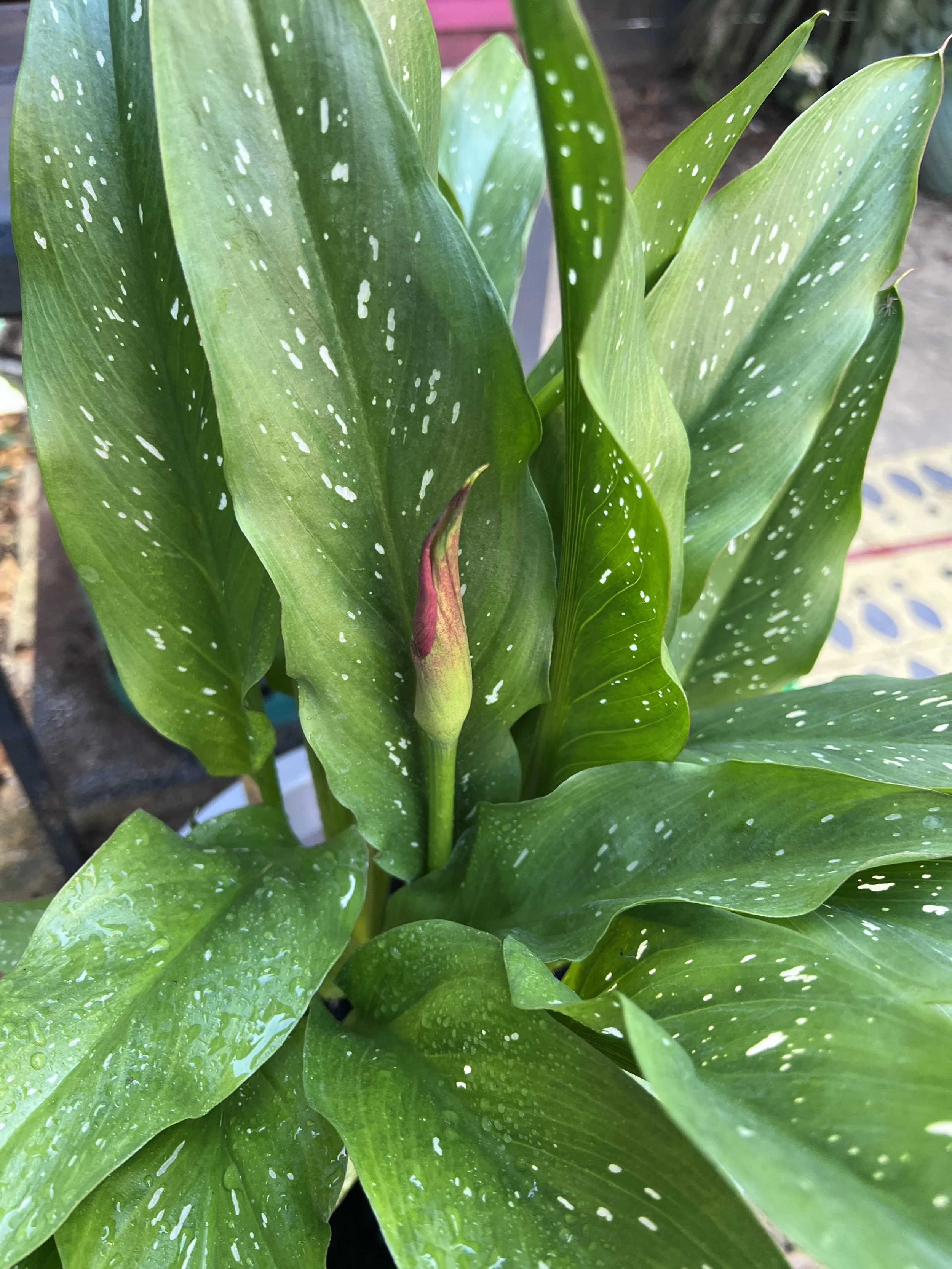
Waiting became part of the joy
It struck me how much creative careers can be like that. We plant seeds all the time: ideas, relationships, projects, skills and conversations. Yet we spend so much time digging them up to check whether they're growing that we forget growth often happens out of sight, but what if the seed has already been planted? What if part of the process is trusting that not everything grows on our timeline?
Creative careers aren't linear. They expand, contract, pause and evolve. Expecting them to be a constant upward trajectory only leaves us feeling like we're failing when we're actually growing. Many of the opportunities I've had in my own career have come from seeds planted months or even years earlier. I once refunded a collector after a piece of artwork was damaged in transit. I assumed that was the end of the story. Four years later she saw an Instagram story from an art fair I was attending and bought another piece. What felt like a closed door had simply taken a different route back to me.
When Exhaustion Looks Like Being Stuck
The challenge is that when things aren't reflected in our bank account or our inbox, we assume nothing is happening, so we push harder, do more and search for another answer. Eventually, many creatives exhaust themselves. I know that feeling too, a few months ago I realised I'd lost my own balance. I was working on this project, then another, then another meeting, another idea. I convinced myself that being busy meant I was moving forward, but I'd stopped doing the things that restored me. There was an underlying worry about money, alongside global events that were outside my control.
Looking back, I wasn't lacking ideas, I was exhausted, and exhaustion has a remarkable way of disguising itself as being stuck. Writing this article, I am aware that I am not writing as someone who's reached the destination. I still have days where I question everything. I still lose perspective. There are moments when uncertainty creeps back in and I wonder whether I'm heading in the right direction. The difference now is that I recognise those moments sooner. I've learned they don't always need fixing. Sometimes they simply need acknowledging. Sometimes they need rest. Sometimes they need a conversation. And often they're a reminder that I'm growing into the next chapter rather than failing in the current one.
There is also a great deal of rejection in a creative career. Clients choose someone else, collectors don't buy, galleries say no and open calls don't go your way. It's easy to see each rejection as evidence that you're stuck. Over time, though, I've tried to see it differently, the win wasn't getting selected. The win was having the courage to submit. Everything after that was outside my control.
When we're exhausted, the instinct is often to push harder, but what we may actually need is rest, reflection and space. Clarity rarely arrives all at once. More often, it emerges through action, and action doesn't always mean doing more. Sometimes the most important action is creating enough space to hear yourself think. Sometimes we discover what we want by discovering what we don't want, and sometimes we need to slow down enough to recognise what is no longer working. Sometimes we need to stop forcing the next step and allow it room to breathe.
Letting Go of an Old Version of Yourself
When I work with creatives, I often notice that feeling stuck isn't always about the future. Sometimes it's about the past, and about holding onto a version of ourselves that no longer fits. It may be the version that believes more effort is always the answer, the version that keeps chasing external validation, or the version that has forgotten why we started creating in the first place. Growth rarely asks us to work harder. More often, it asks us to become more aware.
Questions Worth Asking Yourself
The underlying question is usually the same. "What comes next?" There is rarely a perfect answer, but there are useful questions: what no longer feels aligned, what do I no longer enjoy, what am I avoiding deciding, what am I holding onto because it feels familiar, what would I explore if I wasn't worried about getting it wrong, and what do I already know that I'm not acting on? I have found that these questions often create more movement than another strategy, another course or another social media trend.
One of the biggest lessons I've learned is that we don't have to navigate these periods alone. Sometimes another person can see what we can't. They ask a question we haven't considered and reflect back something we've overlooked. Looking back, many of the biggest shifts in my own career began with conversations. People often arrive in our lives as signposts, helping us see possibilities that were there all along.
A Turning Point, Not a Dead End
What if feeling stuck isn't the problem? What if it's the signal that something needs to change? Not necessarily your work or your goals. Perhaps your pace, your expectations, your approach, your relationship with success, or simply the permission you've given yourself to enjoy the process. Feeling stuck doesn't always mean you've reached a dead end. Sometimes it means you're standing at a turning point, and turning points rarely ask us to become someone different. More often, they ask us to trust who we're already becoming.
Ready to Explore What's Next?
If you're reading this and recognise yourself somewhere in these words, perhaps you're not as stuck as you think. You might simply be standing at one of those turning points.
Those are the conversations I enjoy most—helping creatives make sense of where they are, recognise what's already there, and take the next step with greater clarity. If that resonates, I'd love to hear your story.